

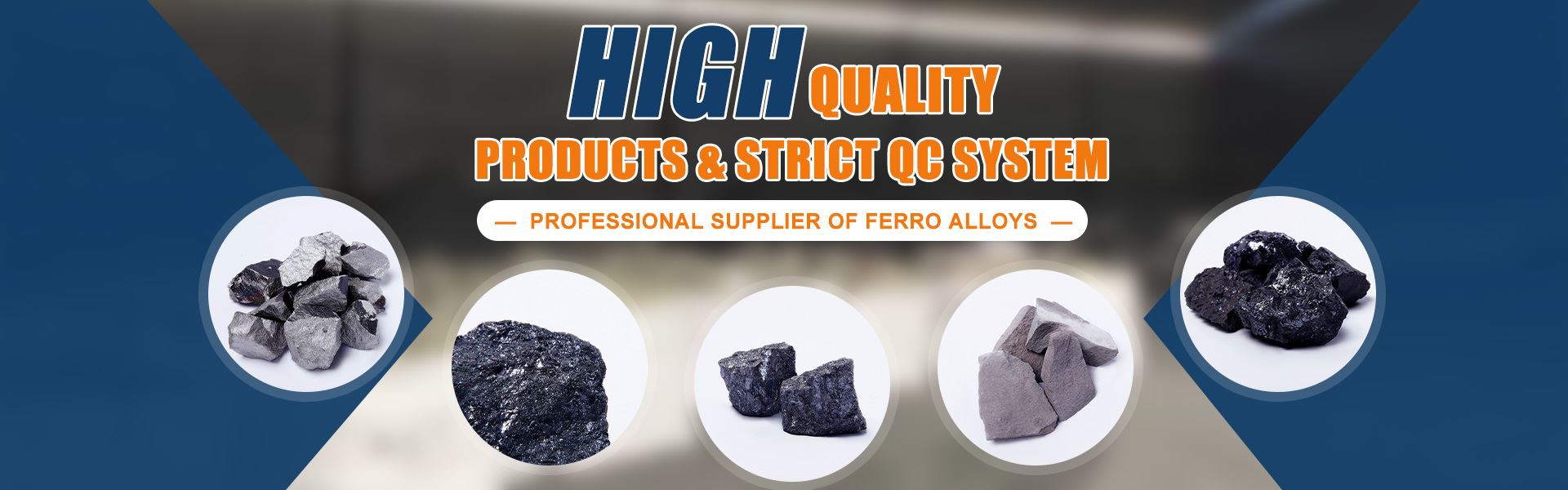

Take Your Business to the Next Level with Wholesale Calcium Silicon from Anyang Kongfang
As a professional Calcium Silicon supplier, our company was established in 2006 with more than 12 years of export experience. In the fierce market competition, our advantages are reflected in:
Strong Team
Our factory covers an area of about 30,000 square meters and currently has more than 140 employees, including more than 15 professional and technical personnel of various types. They can provide you with reliable technical support and considerate services in every aspect of cooperation.
Broad Market
Kongfang products are sold both domestically and abroad. It has exported ferro alloys to more than 20 countries such as Netherlands, Italy, South Korea, Japan, Russia, India, Turkey, Pakistan, Indonesia, Vietnam, Myanmar etc. thus earning a favorable reputation internationally.
Wide Product Range
Explore our extensive product range, featuring high-quality alloys and metals such as Ferro silicon, Silicon manganese, Silicon carbon alloy, Ferro chrome, Silicon metal, Ferro manganese, Silicon carbide, Calcium silicon, Nitrided Ferrosilicon, Silicon slag, Ferro silicon barium, Ferro boron, Manganese metal, Electrolytic manganese metal, and Calcium silicon cored wire etc. Our diverse selection ensures that we meet the diverse needs of our customers across various industries.
Professional Service
Our professional sales team can provide first-class services in addition to 100% quality assurance for customers. We also provide good after-sales service to handle customer complaints and solve problems for customers. We will be responsible for any quality issues.


Brief Introduction to Calcium Silicon
Calcium silicon is mainly used in steel production because it allows for the containment treatment of molten steel as well as deoxidation and desulphurization. Calcium silicon, also known as calcium silicon alloy, is a composite alloy whose main components are silicon and calcium. As a alloy, it also contains different impurities such as aluminum, carbon, sulfur, and phosphorus. It comes in block or powder form.

Features of Calcium Silicon

Strong Oxygen Affinity
Calcium and silicon have a strong affinity for oxygen. Calcium, in particular, has a strong affinity not only for oxygen, but also for sulfur and nitrogen. Therefore, calcium silicate is an ideal composite deoxidizer and desulfurizer.

Strong Sulfur Affinity
Calcium silicon also has a strong chemical affinity for sulfur and nitrogen. Therefore, it can be used to control the shape, size and distribution of sulfide inclusions and improve the fluidity, machinability, ductility and impact properties of steel products.

Cost-Effectiveness
Calcium silicon can replace the more expensive aluminum for final deoxidation. It has been used to produce high-quality steel, special steel and special alloys, such as rails, mild steel, stainless steel and other nickel-based alloys, titanium alloys and other special alloys.

Various Specifications
These calcium silicas are available in various specifications. Some of them contain 30% calcium and 50-55% silicon, and some contain 28% calcium and 55-65% silicon. You can choose the appropriate size based on your specific application.
Calcium Silicon Uses
Calcium silicate plays an important role in the steel industry and is mainly used for:
Used as Deoxidizer and Desulfurizer
The silicon and calcium in calcium silicate have a high affinity for oxygen, and the calcium has a high affinity for sulfur. At the same time, their deoxygenation and desulfurization products float easily, which means they can improve steel properties during the steelmaking process, such as plasticity and impact toughness. Therefore, calcium silicon alloy is a good composite deoxidizer.
Used as an Effective Temperature-Raising Agent
Adding calcium silicon alloy powder to the head of the steel ingot as a heating agent can effectively increase the furnace temperature, thereby improving the quality and yield of the steel.
Used as Deoxidation, Desulfurization Agent and Inoculant in Cast Iron Production
Calcium silicon alloy can deoxidize, desulfurize and strengthen silicon in cast iron, and is an effective inoculant to promote the formation of spherical graphite. In actual use, in order to play the role of calcium silicon alloy more effectively, the particle size of the alloy should be about 2mm, and it can be used directly in the iron flow trough, steelmaking furnace or ladle.
Products Description
| Grade | Chemical Composition(%) | ||||||
| Ca | Si | C | Al | P | S | Fe | |
| ≥ | ≤ | ||||||
| Ca30Si60 | 30 | 60 | 1 | 2.4 | 0.04 | 0.04 | Balance |
| Ca30Si55 | 30 | 55-60 | 1 | 2.4 | 0.04 | 0.04 | Balance |
| Ca30Si50 | 30 | 50-55 | 1 | 2.4 | 0.04 | 0.04 | Balance |
| Ca28Si55 | 28 | 55-60 | 1 | 2.4 | 0.04 | 0.04 | Balance |
Production Method of Calcium Silicon Alloy
The one-step method uses carbon to reduce silica and lime to produce calcium silicon alloy in an electric furnace. The one-step method is divided into mixed feeding method and layered feeding method. The mixed feeding method is to add silica, lime and coke together into the reduction electric furnace. Use carbon to simultaneously reduce CaO and SiO2 to form calcium silicon alloy. The purpose is to reduce the contact between calcium oxide and silicon dioxide and reduce the formation reaction of Cao-SiO2. The layered feeding method is to add lime and coke near the electrode (the amount added is calculated based on the calcium carbide reaction), so that CaO is melted to generate CaC2 as much as possible, and then the silica is mixed with the remaining carbon and added to the furnace for producing calcium-silicon alloy.

Two-Step Method

The two-step method is to first produce calcium carbide (or high carbon ferrosilicon) in an electric furnace, and then add silica and coke to the calcium carbide (or high carbon ferrosilicon plus lime) to produce calcium silicon alloy in another electric furnace. There are two two-step methods. One is to first produce lime and calcium carbide in an electric furnace, and then crush the calcium carbide together with coke and silica in another electric furnace to produce calcium silicon alloy. The other is to produce high-silicon ferrosilicon in an electric furnace, and then use high-silicon ferrosilicon as a reducing agent to reduce calcium oxide in the electric furnace to obtain a calcium-silicon alloy.
Safety Tips on Handling and Contact with Calcium Silicon
Fire Hazard: Calcium silicon may produce flammable gases in contact with water. Some react violently or explosively when in contact with water. Fires may reignite after being extinguished.
Health Hazards: Inhalation or contact with calcium silicon vapors, substances or decomposition products may cause serious injury or death. Fires can produce irritating, corrosive and/or toxic gases. Runoff of firefighting or dilution water may cause environmental contamination.
Measures to Prevent Leakage: Isolate the area of a spill or leak by at least 50 meters (150 feet) (liquids) and at least 25 meters (75 feet) (solids) in all directions. Increase direct precautionary distance downwind as needed.
Firefighting: Do not use water or foam to extinguish calcium silica fires. For small fires, use dry powder, soda ash, lime or sand. For large fires, use dry sand, dry chemicals, soda ash or lime, or evacuate the area and allow the fire to continue burning. If this can be done safely, move undamaged containers away from the area surrounding the fire.
Non-Fire Response: Eliminate all sources of ignition (no smoking, flares, sparks or flames) near calcium silicate storage areas. Do not touch or walk over spilled material. If you can do this without risk, stop the leak.
Deal with Leaks: For small spills, cover with dry earth, dry sand or other non-combustible material, then cover with plastic sheeting to minimize spread or contact with rainwater. For powder spills, use a plastic sheet or tarp to cover the powder spill to minimize spreading and keep the powder dry. Do not clean or dispose of unless under expert supervision.
Protective Clothing: Wear a positive pressure self-contained breathing apparatus (SCBA) when handling calcium silicate powder. Where there is no risk of fire, wear chemical protective clothing specifically recommended by the manufacturer. Structural firefighters' protective clothing provides thermal protection but only limited chemical protection.
irst Aid: For accidental inhalation of calcium silicon, it is recommended to call emergency services. Make sure medical personnel understand the materials involved and take precautions to protect themselves. If it is safe to do so, move the victim to fresh air. If the victim is not breathing, give artificial respiration. If breathing is difficult, give oxygen. Remove and isolate contaminated clothing and shoes. If contact occurs, wipe immediately from skin and flush skin or eyes with running water for at least 20 minutes.
Our Certifications
Our company has obtained the following certificates:


Factory Pictures
Below Are Photos Of Our Factory For You To View:

Frequently Asked Questions
Q: Why is calcium silicon added in steel production?
Q: How does calcium silicon promote deoxidation?
Q: What role does calcium silicon play in desulfurization?
Q: What industries are calcium silicon mainly used in?
Q: What are the typical components of calcium silicon?
Q: How is calcium silicon added to the steelmaking process?
Q: What are the benefits of using calcium silicon in steelmaking?
Q: Can calcium silicon be used for other purposes besides steelmaking?
Q: Are there any safety considerations when handling calcium silicon?
Q: What types of calcium silicon are there?
We're professional calcium silicon manufacturers and suppliers in China, specialized in providing high quality products and service. We warmly welcome you to buy high-grade calcium silicon at competitive price from our factory.
Silicon Calcium 6020, silicon calcium alloy lump, silicon calcium alloy 6020