


Take Your Business to the Next Level with Wholesale Silicon Carbide from Anyang Kongfang
As a professional Silicon Carbide supplier, our company was established in 2006 with more than 12 years of export experience. In the fierce market competition, our advantages are reflected in:
Strong Team
Our factory covers an area of about 30,000 square meters and currently has more than 140 employees, including more than 15 professional and technical personnel of various types. They can provide you with reliable technical support and considerate services in every aspect of cooperation.
Broad Market
Kongfang products are sold both domestically and abroad. It has exported ferro alloys to more than 20 countries such as Netherlands, Italy, South Korea, Japan, Russia, India, Turkey, Pakistan, Indonesia, Vietnam, Myanmar etc. thus earning a favorable reputation internationally.
Wide Product Range
Explore our extensive product range, featuring high-quality alloys and metals such as Ferro silicon, Silicon manganese, Silicon carbon alloy, Ferro chrome, Silicon metal, Ferro manganese, Silicon carbide, Calcium silicon, Nitrided Ferrosilicon, Silicon slag, Ferro silicon barium, Ferro boron, Manganese metal, Electrolytic manganese metal, and Calcium silicon cored wire etc. Our diverse selection ensures that we meet the diverse needs of our customers across various industries.
Professional Service
Our professional sales team can provide first-class services in addition to 100% quality assurance for customers. We also provide good after-sales service to handle customer complaints and solve problems for customers. We will be responsible for any quality issues.
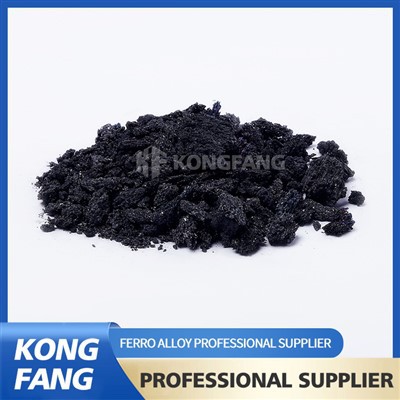
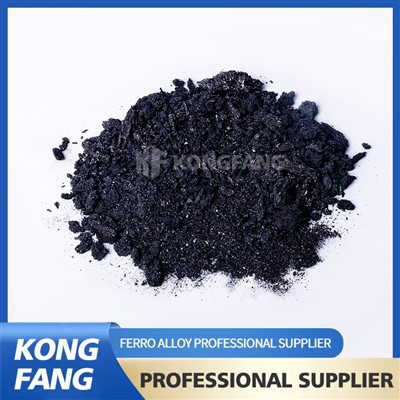


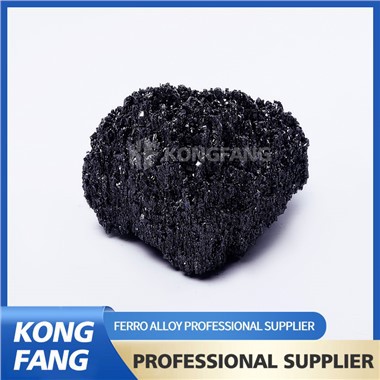


Brief Introduction to Silicon Carbide
Silicon carbide, exceedingly hard, synthetically produced crystalline compound of silicon and carbon. Its chemical formula is SiC. Since the late 19th century silicon carbide has been an important material for sandpapers, grinding wheels, and cutting tools. More recently, it has found application in refractory linings and heating elements for industrial furnaces, in wear-resistant parts for pumps and rocket engines, and in semiconducting substrates for light-emitting diodes.
Two Methods of Manufacturing Silicon Carbide
Lely Method
During this process, a granite crucible heats to a very high temperature, usually by way of induction, to sublimate silicon carbide powder. A graphite rod with lower temperature suspends in the gaseous mixture, which inherently allows the pure silicon carbide to deposit and form crystals.
Chemical Vapor Deposition
Alternatively, manufacturers grow cubic SiC using chemical vapor deposition, which is commonly used in carbon-based synthesis processes and used in the semiconductor industry. In this method, a specialized chemical blend of gases enters a vacuum environment and combines before depositing onto a substrate.

Physical Properties of Silicon Carbide
Odour: No odour
Appearance: Black grey to green powder, grey solid
Specific Density: 3.21 g/cm3
Solubility: Insoluble in water, alcohol, and acid.
Chemical Properties of Silicon Carbide
Electrical Properties: Due to its semiconducting properties, it has interesting electrical properties, with resistances varying by seven orders of magnitude for different components.
Resistance: Silicon carbide is resistant to most organic and inorganic acids, bases and salts in various concentrations, except for hydrofluoric acid and acid fluoride.
Features of Silicon Carbide
Robust Crystal Structure
Silicon carbide is composed of light elements, silicon (Si) and carbon (C). Its basic building block is a crystal of four carbon atoms forming a tetrahedron, covalently bonded to a single silicon atom at the centre. SiC also exhibits polymorphism as it exists in different phases and crystalline structures.
High Hardness
Silicon carbide has a Mohs hardness rating of 9, making it the hardest available material next to boron carbide (9.5) and diamond (10). It is this apparent property that makes SiC an excellent material choice for mechanical seals, bearings, and cutting tools.
High-Temperature Resistance
Silicon carbide's resistance to high temperature and thermal shock is the property that allows SiC to be used in the manufacturing of fire bricks and other refractory materials. The decomposition of silicon carbide starts at 2000°C.
Conductivity
If SiC is purified, its behaviour manifests that of an electrical insulator. However, by governing impurities, silicon carbides can exhibit the electrical properties of a semiconductor. For example, introducing varying amounts of aluminium by doping will yield a p-type semiconductor. Typically, an industrial-grade SiC has a purity of about 98 to 99.5%. Common impurities are aluminium, iron, oxygen, and free carbon.
Chemical Stability
Silicon carbide is a stable and chemically inert substance with high corrosion resistance even when exposed or boiled in acids (hydrochloric, sulphuric, or hydrofluoric acid) or bases (concentrated sodium hydroxides). It is found to react in chlorine, but only at a temperature of 900°C and above. Silicon carbide will start an oxidation reaction in the air when the temperature is at approximately 850°C to form SiO2.
Advantages of Silicon Carbide
Silicon carbide offers advantages for high temperature, high pressure and high power applications including:

01
Mechanical Strength
Silicon carbide has high wear resistance and high hardness, so it is widely used as a ceramic material in high temperature and wear-resistant applications in many industries.

02
Temperature Resistance
Silicon carbide has excellent high temperature resistance, low thermal expansion and high thermal consistency, and it is chemically inert at all temperatures.

03
Conductivity
Silicon carbide has variable conductivity, including semiconductor properties and non-linear resistance, so it is used in electronic circuit components because of its resistance to high voltages.

04
Fire Resistance
Silicon carbide is very fire-resistant, so it can be used to create sensors that detect flammable and combustible gases in harsh, high-temperature and corrosive environments. It is widely used as a refractory material in the production of steel, ceramics, non-ferrous metals, energy, chemicals, etc.
Uses of Silicon Carbide

Silicon Carbide Used in Military Bulletproof Armor
Silicon Carbide Used in Semiconductors
Silicon Carbide Used in Abrasives
Silicon Carbide Used in Electric Vehicles
Silicon Carbide Used in Jewelry
Silicon Carbide Used in Fuel
Silicon Carbide Used in LEDs
Silicon Carbide: Current Markets and Future
Developments
The extraordinary rise of the global silicon carbide (SiC) market is undoubtedly remarkable, with the automotive industry kicking off a shift from silicon to SiC for power semiconductor applications as early as 2017. As it enters the power electronics mainstream, does it run the risk of quickly becoming a commodity? The following is an overview of the existing silicon carbide market and simple predictions of future development:
Record Market Growth
According to the latest 2023 version of the power SiC report released by relevant agencies, the global power SiC device market is expected to grow to nearly US$9 billion by 2028, an increase of 31% from 2022. Automotive applications dominate the SiC market, accounting for 70%. Power SiC market by 2022 and various industrial applications including transportation, energy and telecommunications.
Global Investment Competition
Global chip manufacturers are paying close attention to the size transformation of SiC substrates. As some suppliers take the lead in launching 8-inch production capacity, other suppliers are also actively following suit and actively seeking to cooperate with major players in the upstream and downstream of the global supply chain to occupy a favorable position in the market. Global production capacity at the wafer level is growing rapidly with a raft of investment announcements.
Shifting Supply Chain Focus
New research highlights the changing focus on SiC supply chain bottlenecks. Massive capacity expansion does not simply mean oversupply. SiC wafer supply shortages in 2021 and 2022 will result in limited access to SiC wafers for many non-automotive applications, as electric vehicles have been a major driver of the SiC market. The SiC wafer capacity expansion will be put into operation in 2023, promoting the growth of the SiC device market. SiC wafers for MOSFET and automotive applications will be less affected by cost optimization. However, lower quality players will need to drop prices to gain remaining utilization. We expect higher price erosion for SiC diode-grade wafers. In the short to medium term, eight inches will be reserved primarily for interior use.
Our Certifications
Our company has obtained the following certificates:


Factory Pictures
Below Are Photos Of Our Factory For You To View:

FAQ
Q: Which are the applications of silicon carbide in electronic devices?
Q: Why silicon carbide overcomes Si in power applications?
Q: Why silicon carbide can outperform IGBT at high frequencies?
Q: Which impurities are used to dope silicon carbide material?
Q: How does silicon carbide semiconductor achieve better thermal management than silicon?
Q: Why is silicon carbide (SiC) important?
Q: How does Silicon Carbide (SiC) compare to Gallium Nitride (GaN)?
Q: What are the main uses of silicon carbide?
Q: How hard is silicon carbide?
Q: Is silicon carbide soluble in water?
Q: Is silicon carbide as hard as diamond?
Q: What are the difficulties in manufacturing silicon carbide?
Q: Is silicon carbide expensive?
Q: Which is stronger, aluminum oxide or silicon carbide?
Q: What is the difference between green silicon carbide and black silicon carbide?
Q: Is silicon carbide stronger than stainless steel?
Q: Where is silicon carbide mined?
Q: Which is harder, silicon carbide or tungsten carbide?
Q: What is black silicon carbide?
Q: What color is silicon carbide?
We're professional silicon carbide manufacturers and suppliers in China, specialized in providing high quality products and service. We warmly welcome you to buy high-grade silicon carbide at competitive price from our factory.
silicon carbide 0 100mm, high purity silicon carbide powder, SIC 1 5cm