Take Your Business to the Next Level with Wholesale Silicon Metal from Anyang Kongfang

As a professional Silicon Metal supplier, our company was established in 2006 with more than 12 years of export experience. In the fierce market competition, our advantages are reflected in:

Strong Team

Our factory covers an area of about 30,000 square meters and currently has more than 140 employees, including more than 15 professional and technical personnel of various types. They can provide you with reliable technical support and considerate services in every aspect of cooperation.

Broad Market

Kongfang products are sold both domestically and abroad. It has exported ferro alloys to more than 20 countries such as Netherlands, Italy, South Korea, Japan, Russia, India, Turkey, Pakistan, Indonesia, Vietnam, Myanmar etc. thus earning a favorable reputation internationally.

Wide Product Range

Explore our extensive product range, featuring high-quality alloys and metals such as Ferro silicon, Silicon manganese, Silicon carbon alloy, Ferro chrome, Silicon metal, Ferro manganese, Silicon carbide, Calcium silicon, Nitrided Ferrosilicon, Silicon slag, Ferro silicon barium, Ferro boron, Manganese metal, Electrolytic manganese metal, and Calcium silicon cored wire etc. Our diverse selection ensures that we meet the diverse needs of our customers across various industries.

Professional Service

Our professional sales team can provide first-class services in addition to 100% quality assurance for customers. We also provide good after-sales service to handle customer complaints and solve problems for customers. We will be responsible for any quality issues.


First 12 Last
Anyang KongFang Metallurgical New Material Technology Co., Ltd
 
Brief Introduction to Silicon Metal
 

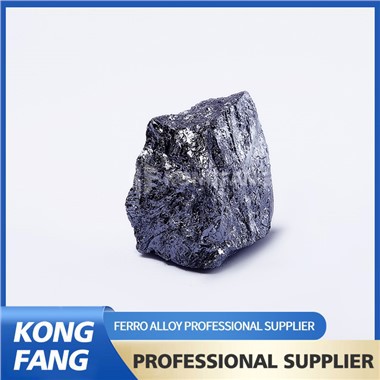
Silicon metal (symbol Si), in its pure form, is a metalloid element with gray metallic luster. Metallurgical grade silicon is known as silicon metal because of its lustrous appearance. Silicon is used mainly in the manufacture of silanes and silicones, as a hardener or alloying element to produce aluminium alloys, and in the manufacture of micro-processors and solar cells. Silicon metal is commonly produced by smelting submerged electric arc furnaces, which is an energy-intensive process.


Classification of Silicon Metal


The classification of silicon metal is usually based on the content of iron, aluminum and calcium, the three main impurities contained in the composition of silicon metal. According to the content of iron, aluminum and calcium in metal silicon, metal silicon can be divided into 553, 441, 411, 421, 3303, 3305, 2202, 2502, 1501, 1101 and other different grades.The following qualities are typical on the market: 

Silicon 553

iron max. 0,5 %, aluminum max. 0,5 %, calcium max. 0,3 % (standard quality)

Silicon 441

iron max. 0,4 %, aluminum max. 0,4 %, calcium max. 0,1 % (refined quality)

Silicon 3303

iron max. 0,3 %, aluminum max. 0,3 %, calcium max. 0,03 % (special quality)

Silicon 2202

iron max. 0,2 %, aluminum max. 0,2 %, calcium max. 0,02 % (low iron quality)


Properties of Silicon Metal
 
modular-1


Physical Properties


Manganese is one of the most important deoxidizers in the steelmaking process. Almost all grades of steel require manganese for deoxidation because the oxygen products produced by manganese deoxidation have low melting points and tend to float. Manganese can also enhance the deoxidation effect of strong deoxidizers such as silicon and aluminum.


Chemical Properties


Like most metals, silicon is electropositive, usually by giving up its four valence electrons to form a cation (i.e., forming a tetracation). Silicon can also form covalent compounds (sharing electrons) and anions (negative ions). For example, silicon can be oxidized to form anions in silicate compounds. It is generally unreactive at room temperature, but its reactivity increases greatly at higher temperatures. Silicon metal reacts with air at temperatures above 900 degrees Celsius to form silicon dioxide and silicon nitride. Under normal conditions, silicon does not react with most acids.
modular-2
Advantages of Silicon Metal
productcate-400-200
 

Easy to Manufacture

Silicon is the second most abundant element in the earth's crust, which means it is easy to produce in large quantities, making the product cheap. Moreover, we use mature processing technology and the cost is relatively low.

productcate-400-200
 

Excellent Electrical Conductivity

Silicon can form covalent bonds with other atoms, such as hydrogen and nitrogen, because it has four valence electrons. Its band gap is 1.1 eV, which means it has the potential to conduct electricity under the right conditions.

productcate-400-200
 

High Hardness and Good Thermal Stability

Due to its hardness, silicon metal can be safely handled without causing any damage. At the same time, its thermal stability is as high as 1100 degrees Celsius, making it suitable for various scales of refractory production and powder metallurgy industries.

productcate-400-200
 

Speed up Deoxidation Speed

Silicon metal can form silica by affinity with oxygen, which can reduce the impact of oxygen on material purity during the smelting process, thereby achieving efficient deoxidation and improving the quality of steel.


Silicon Metal Parameters (Take Off Grade Silicon as an Example)


Grade Si Fe Al Ca
Low grade Silicon 40-90% / / /
Silicon97 96-98% 1.8%max 0.8%max 0.4%max


Typical Applications of Silicon Metal


CaSi CW Calsium Silicon Cored Wire

In the Aluminum Ingot Factory

Adding metallic silicon is generally used to improve the mechanical properties of aluminum, which is a common method for preparing aluminum alloys. For example, in aluminum alloy die-casting applications, silicon can improve formability and yield.

In the Aluminum Alloy Industry

Substituting pure aluminum in the steelmaking process can improve the utilization rate of deoxidizer, purify molten steel, and improve the quality of steel. Aluminum used in automobiles and other industries has a considerable demand for industrial silicon. Therefore, the development of the automobile industry in a region or country directly affects the rise and fall of the industrial silicon market.

Non-ferrous Metal Alloy Additives

Industrial silicon is also used as an alloying agent for silicon steel with higher requirements, and as a deoxidizer for smelting special steel and non-ferrous alloys. Especially pure silicon powder with good consistency can be shaken, pressed and bonded with other materials according to its particle size.

Chemical Industry

Silicon metal is used to produce silicone rubber, silicone resin, silicone oil and other silicones. Silicone rubber has good elasticity and high temperature resistance. Used in the manufacture of medical supplies, high temperature gaskets, etc. Silicone resin is used to produce insulating paint, high-temperature paint, etc. Silicone oil is an oily substance whose viscosity is not affected by temperature. It can be used to produce lubricants, polishes, liquid springs, dielectric fluids, etc., and can also be processed into colorless and transparent liquids.

Photovoltaic Industry and Electronics Industry

Metallic silicon is purified through a series of processes to produce polycrystalline silicon and monocrystalline silicon, which are used in the photovoltaic and electronic industries. Polycrystalline silicon cells are mainly used in solar rooftop power stations, commercial power stations and urban power stations with high land costs. The demand for metallic silicon in solar photovoltaic products has increased significantly. Modern large-scale integrated circuits are almost all made of high-purity metallic silicon. High-purity metallic silicon is still the main raw material for the production of solar photovoltaic products. It can be said that metallic silicon has become a basic pillar industry in the information age.


Our Certifications
 

Our company has obtained the following certificates:

productcate-1-1
productcate-1-1
productcate-1-1
productcate-1-1
productcate-1-1


Factory Pictures
 

Below Are Photos Of Our Factory For You To View:

productcate-1-1


Ultimate Guide
 

Q: How much does silicon metal cost?

A: The production cost of silicon metal depends on the quality offered. Producing 1 ton of silicon requires approximately 6 tons of raw materials; 2.7 tons of quartz, 1.5 tons of reducing agent (low ash coal or charcoal), and 1.5 tons of wood. Another important cost component is energy, which consumes approximately 13,000 kWh per ton of silicon.

Q: What are the uses of silicon metal in daily life?

A: Silicon and its compounds have a wide range of industrial and commercial uses. Some well-known examples include its use as a semiconductor in electronic devices such as computers and phones, in the production of glasses such as silica and silicates, and in medical procedures such as silicone.

Q: What are the properties of silicon?

A: Silicon has many unique properties. Some unique properties include solid state under standard conditions, metallic luster, brittleness, and the ability to act as a semiconductor.

Q: What element is silicon?

A: Silicon is classified as a metalloid element. This is because it mixes the properties of metallic and non-metallic elements.

Q: Is silicon a metallic element or a non-metallic element?

A: Silicon is neither a metal nor a non-metal. It is classified as an element called a metalloid because it has properties of both a metal and a non-metal.

Q: What is the atomic number of silicon?

A: The atomic number of silicon is 14 and the relative atomic mass is 28.085 u.

Q: Is silicon metal easy to combine with carbon?

A: Silicon metal tends to combine easily with other carbon-based elements. Silicon can also form alloys with other metals to create lightweight metals in high-temperature, high-pressure environments.

Q: How is silicon used?

A: Silicon is abundant in reserves and has a wide range of uses. It is primarily used in the semiconductor industry and has other practical applications in alloying with other elements.

Q: Is silicon metal a metal?

A: Silicon is a semiconductor rather than a metal. It does not form any positive ions in the ground state, and its pure form has a low conductivity.

Q: How is metallic silicon made?

A: The basic process for producing silicon has remained the same for decades: quartz or gravel (SiO2) is mixed with a carbon source and superheated in a submersible furnace. As the mixture heats, the carbon reacts with the oxygen in the quartz to form CO gas, which reduces the quartz to 99% silicon in its molten form.

Q: What advantages can metallic silicon play in steel smelting?

A: Metallic silicon can improve the high-temperature resistance of products during the smelting process, which is often required in the steel industry. Metal silicon powder can improve the wear resistance of castings in the production of some wear-resistant castings.

Q: Is metallic silicon hard?

A: Hard and brittle. It is insoluble in acid at normal temperature, but easily soluble in alkali. The properties of metal silicon are similar to those of germanium, lead, and tin, and have semiconductor properties.

Q: Why is silicon metal one of the most useful elements?

A: Because silicon is a material commonly used as a semiconductor in electronics. Transistors, printed circuit boards, and integrated circuits exploit silicon's highly conductive properties to maximize their performance. It is found in computer chips, liquid crystal displays, diodes and other fields.

Q: Is silicon metal a magnetic material?

A: Silicon is considered diamagnetic because it lacks any unpaired electrons. It has pairs of electrons throughout.

Q: What does silicon metal react with?

A: Like carbon, silicon metal is relatively inactive at room temperature. But when heated, it reacts violently with halogens (fluorine, chlorine, bromine and iodine) to form halides, and with some metals to form silicides.

Q: How is MG Si produced?

A: MG Si is produced in submerged electric graphite arc furnaces filled with chunks of high-purity quartz. Furnace temperature is 1900–2100 °C with a radial temperature profile designed to produce molten silicon in the inner hot zone and a cooler outer zone for favorable formation of by-products.

Q: What is silicon metal 553?

A: Silicon metal 553 is a commonly used grade. In the metal silicon 553, the silicon content should be as high as 98.5%. The contents of iron, aluminum, and calcium are 0.5%, 0.5%, and 0.3% respectively. Silicon 553 and silicon 441 are mainly used in the production of aluminum ingots.

Q: What role can silicon metal play in aluminum factories?

A: When silicon is added to aluminum, the silicon makes the metal alloy more fluid without damaging the metal at high temperatures. Silicon actually lowers the melting point of aluminum.

Q: How do silicon metal react with aluminum?

A: Aluminum and silicon form a eutectic with a melting point of 577 degrees Celsius and a Si content of 12.5% or 12.6%. At this temperature, up to 1.65% Si can be dissolved in aluminum. Solubility decreases rapidly with increasing temperature.

Q: What is silicon metal powder?

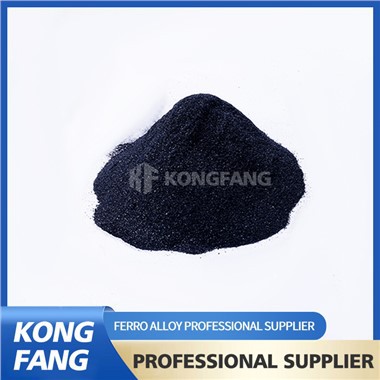
A: Silicon metal powder, also known as silicon powder or industrial silicon powder, is made from silicon blocks as raw materials through crushing, screening, washing and other processes.

We're professional silicon metal manufacturers and suppliers in China, specialized in providing high quality products and service. We warmly welcome you to buy high-grade silicon metal at competitive price from our factory.

silicon metal powder 0 3mm, silicon metal 421, silicon metal alloy kongfang

Shopping Bags